Posted on February 9, 2026 · By Echoes of Kin Genealogy
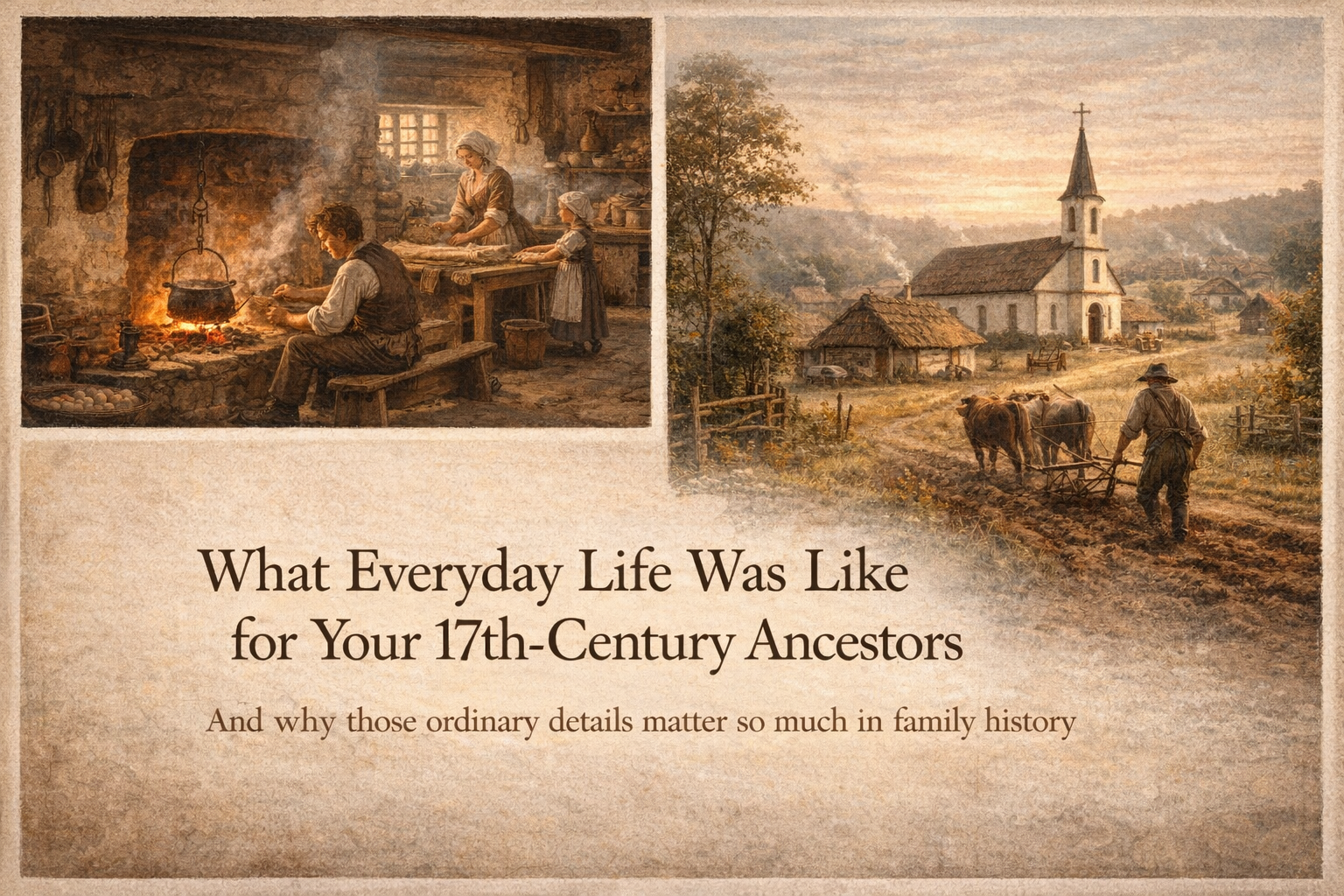
And why those ordinary details matter so much in family history
Have you ever paused over a name in an old parish register and wondered what a typical Tuesday looked like for that person?
Not the dramatic moments. Not the milestones. Just the quiet rhythm of ordinary life — the work, the meals, the responsibilities, and the small routines that filled most of their days.
When we research 17th-century ancestors, records often give us only brief glimpses: a baptism, a marriage, a burial, maybe a tax list or land record. But understanding everyday life helps us see those ancestors as real people, not just entries in fading ink.
And in family history, context is often what transforms names into stories.
Why Everyday Life Matters in Genealogy
Family history isn’t only about tracing lines — it’s about understanding lives.
When we learn how people lived in the 1600s, we begin to understand:
- Why families moved
- Why children married young
- Why widows remarried quickly
- Why land ownership mattered so deeply
- Why certain records exist — and why others don’t
Records like this remind us that survival, not sentiment, shaped many decisions. Your ancestors’ choices were often practical responses to the demands of daily life.
What Everyday Life Looked Like in the 1600s
While experiences varied by region, class, and culture, most 17th-century people shared some common realities.
Home Was a Workplace

For many families, the home was not just where life happened — it was where work happened.
- Cooking was done over an open hearth
- Clothing was handmade and mended repeatedly
- Soap, candles, and tools were often made at home
- Gardens and small livestock supported survival
Children worked alongside adults from an early age. There was little separation between “family life” and “labor.”
Behind this simple setup was a family constantly working to meet basic needs.
Work Was Physical and Seasonal
Most people were farmers, laborers, or craftspeople. Work followed the seasons:
- Spring and summer meant planting and tending crops
- Autumn meant harvest — the most critical season
- Winter was for repairs, toolmaking, and textile work
A poor harvest could mean hunger. Illness or injury could threaten an entire household’s survival.
This helps explain why widows remarried quickly or why extended family often lived nearby — labor was essential to survival.

Food Was Simple and Uncertain
Daily meals were repetitive and dependent on local crops.
Common foods included:
- Bread or porridge made from grains
- Root vegetables like turnips and onions
- Preserved meats or fish when available
- Seasonal fruits when in harvest
Food shortages were not unusual. Feast and famine could exist within the same year.
These realities shaped family size, health, and migration patterns — patterns we still see in the records.
Family Was an Economic Unit
Marriage wasn’t only emotional — it was practical.
- Children contributed labor
- Elderly parents often lived with adult children
- Households could include apprentices, servants, or relatives
High mortality meant many children did not reach adulthood. Blended families were common due to remarriage after a spouse’s death.
These small details often hold the biggest stories — especially when we see multiple marriages or guardianship records in our research.

Common Misconceptions About 17th-Century Life
Let’s clear up a few myths:
Myth: Life was always miserable.
Reality: Life was hard, but it also included community, faith, seasonal celebrations, and family bonds.
Myth: People didn’t move much.
Reality: Migration was common — for land, work, religion, or opportunity.
Myth: Records are sparse because people were unimportant.
Reality: Many records simply didn’t survive, and literacy levels affected documentation.
How This Shows Up in Real Research
Understanding daily life helps us interpret records more accurately.
Example Scenario (Typical, Not a Specific Person)
You find:
- A marriage record for a widower with young children
- A second marriage only months after a spouse’s burial
Without context, this can feel abrupt. But knowing the demands of running a household in the 1600s, remarriage often meant ensuring children were cared for and work continued.
Clues Everyday Life Helps Reveal
- Land records → Indicate farming responsibilities and family labor needs
- Apprenticeship records → Show how children entered trades early
- Probate inventories → Reveal tools, animals, and household goods that reflect daily life
- Church records → Show community structure and social expectations
Everyday context turns lists of items into a picture of lived experience.

Research Tips: Finding Traces of Daily Life
Where to Look
- Probate inventories and wills
- Manorial or land court records (in Europe)
- Tax lists
- Churchwardens’ accounts
- Local histories and agricultural studies
What to Notice
- Tools, livestock, and household items
- Occupation clues
- Neighbors listed in records (often relatives or work partners)
- Seasonal timing of events (marriages after harvest, etc.)
Mistakes to Avoid
- Assuming modern comfort standards
- Interpreting quick remarriages as emotional indifference
- Ignoring minor items in inventories — they often reveal the most
Records from the 1600s can feel distant, but behind every entry was a person managing the same core concerns we recognize today: food, shelter, family, and hope for stability.
When we understand everyday life, we stop asking only “What happened?” and start asking “What did life require of them?”
That shift deepens both our research and our empathy.
Next time you find a 17th-century record, pause before moving on.
Look at it again — not just as a document, but as a window into daily life. What kind of work might have filled their days? What responsibilities shaped their choices?
Sometimes the quiet, ordinary details are what bring our ancestors closest to us.
Leave a Reply