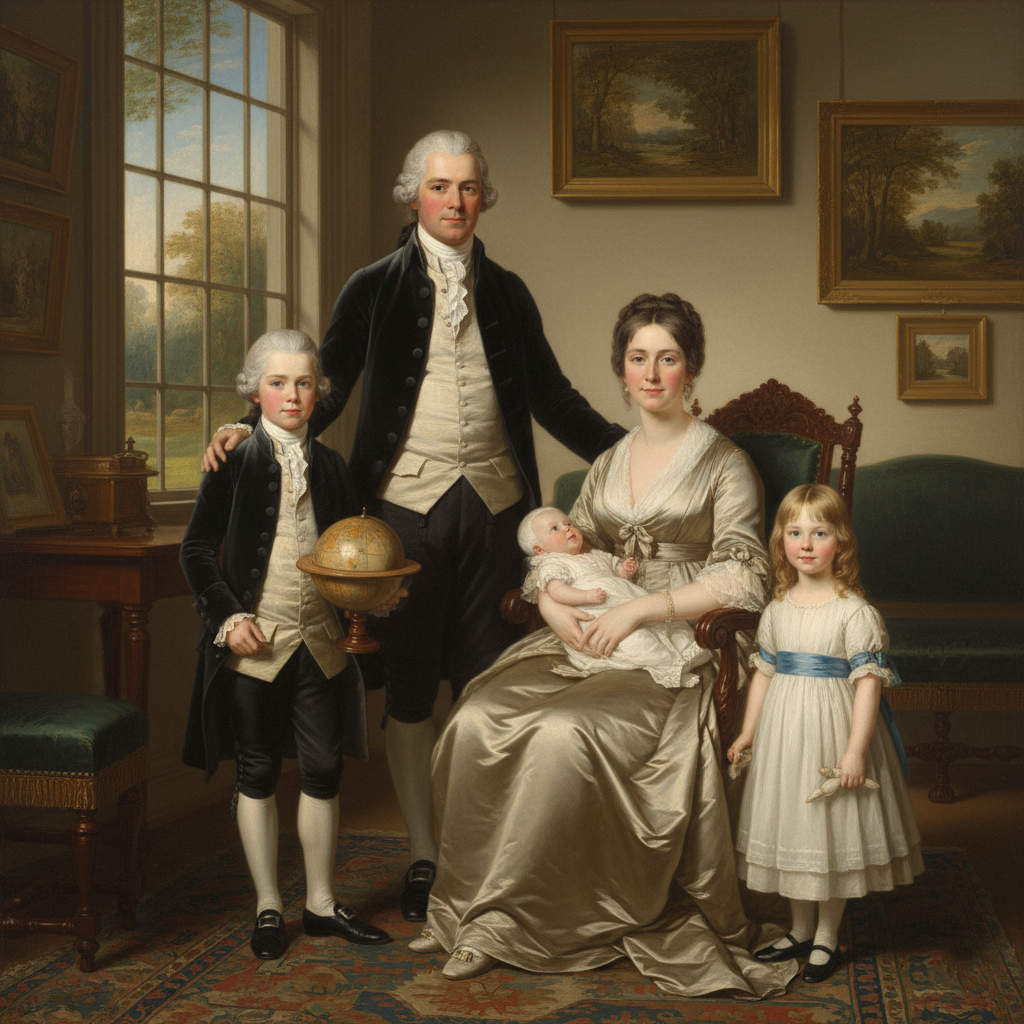
Welcome back to Echoes of Kin Genealogy, your portal to the past! Today, we’re taking a journey back to the 18th century, a fascinating era that laid much of the groundwork for the modern world. What was daily life truly like for your ancestors during this period of significant change and enduring traditions? Let’s explore.
The Age of Enlightenment: A Century of Transition
The 18th century, spanning from 1701 to 1800, was a dynamic period marked by the Enlightenment, burgeoning colonial expansion, significant social stratification, and the early rumblings of industrialization and revolution. For your ancestors, this meant navigating a world where ancient customs coexisted with new ideas, and life was often challenging but rich in community and purpose.
Life in Rural vs. Urban Settings
Just like in later centuries, your ancestors’ daily experiences were largely shaped by whether they lived in the countryside or a developing town or city.
Rural Life: The Heartbeat of Agriculture
The vast majority of people lived in rural areas, where life revolved around the agricultural calendar:
- Farm-Centric Existence: Days were dictated by the seasons, with planting, tending, and harvesting crops, and caring for livestock. Manual labor was the norm for all family members.
- Local Economies: Most goods were produced locally or within the household. Bartering and small-scale trade were common.
- Strong Community and Church: Life was deeply intertwined with the local community and religious institutions, which provided social structure, support, and entertainment.
- Limited Travel: Journeys were often difficult and slow, making extended travel rare for most.
Urban Life: Growing Centers of Commerce
While still relatively small compared to future centuries, towns and cities were growing, offering different experiences:
- Artisans and Tradesmen: Urban ancestors might have been weavers, blacksmiths, bakers, shopkeepers, or laborers, with daily routines centered on their specific craft or trade.
- Crowded Conditions: Early urban centers were often dense, with close-quarter living and challenges in sanitation and public health.
- Social Hubs: Cities offered more diverse social interactions, access to markets, and new ideas spreading through coffee houses and public discourse.
- Emerging Professions: The century saw the growth of professions like lawyers, doctors, and merchants, contributing to a more varied social landscape.
Home and Family Life
Family was the fundamental unit of society in the 18th century, regardless of location:
- Large Households: Families were typically large, often including multiple generations and sometimes even apprentices or servants.
- Defined Roles: Gender roles were generally well-established, with men often responsible for income generation and external affairs, and women managing the household, childcare, and often contributing to the family’s economic activities (e.g., spinning, gardening).
- Domestic Labor: Household chores were incredibly demanding. Cooking over open fires, hand-washing clothes, and preserving food were daily tasks.
- Education: Access to formal education was limited, particularly for the poor and for girls, though literacy rates slowly improved throughout the century. Education often happened within the home or through apprenticeships.
Health and Medicine
Medical knowledge in the 18th century was still in its infancy, and life was often precarious:
- Rudimentary Understanding: The concept of germ theory was unknown, leading to widespread infections and diseases.
- Common Ailments: Smallpox, tuberculosis, dysentery, and various fevers were common and frequently fatal. Infant and child mortality rates were very high.
- Physicians and Folk Remedies: Access to trained physicians was limited, especially in rural areas. Many relied on barber-surgeons, apothecaries, and traditional folk remedies passed down through generations.
- Childbirth Risks: Childbirth remained one of the most dangerous events for women.
Technology and Innovation
While not as rapid as the 19th century, the 18th century saw important innovations that gradually began to influence daily life:
- Agricultural Improvements: New farming techniques and crop rotation methods began to increase food production.
- Textile Innovations: Early advancements like the flying shuttle and spinning jenny started to revolutionize textile production, particularly towards the end of the century.
- Transportation: Travel remained largely dependent on horse-drawn carriages and sailing ships, though road improvements began in some areas.
- Clocks and Almanacs: Timekeeping became more precise, and almanacs were essential for farmers and for daily planning.
Connecting with Their World
Understanding the rhythms, challenges, and joys of 18th-century daily life allows us to truly connect with our ancestors. When you encounter a birth record from 1750 or a marriage certificate from 1788, take a moment to imagine their world: the clothing they wore, the food they ate, the tools they used, the sounds of their village or town, and the hopes and fears that shaped their existence.
What aspects of your 18th-century ancestors’ lives have you discovered that particularly resonate with you? Share your stories and insights in the comments below!
Leave a Reply